SEED Telegram Mini App Review: Farming Game or Another Overhyped Tap-to-Earn Project?
SEED is a Telegram Mini App that combines farming simulation mechanics with passive crypto-style rewards. While the concept looks appealing at first glance, the actual gameplay and reward system raise several questions about depth, transparency, and long-term value.

Introduction
Telegram Mini Apps have become a rapidly growing segment of casual gaming and crypto-inspired reward platforms. Many of them promise simple mechanics, passive earnings, and community interaction directly inside the Telegram ecosystem.
SEED is one of these projects. It presents itself as a farming-style simulation where users grow virtual resources, complete missions, and increase production speed over time. The app suggests that players can accumulate “SEED” tokens through regular interaction and strategic upgrades.
However, after exploring the interface and available mechanics, the experience feels more limited than the initial concept might suggest.
What This Product Is
SEED is a Telegram Mini App built around a simplified farming concept. Instead of traditional crop management, the game focuses on passive generation mechanics. Players accumulate SEED tokens through a virtual tree that continuously produces resources over time.
The gameplay loop is fairly straightforward:
open the app
collect generated SEED
upgrade production tools
complete missions
invite friends for bonuses
At its core, the system resembles many other “tap-to-earn” or passive reward projects that became popular within Telegram over the past few years.
The app interface shows a central tree that acts as the main production unit. Over time, small amounts of SEED accumulate in storage, which users can claim and add to their balance.
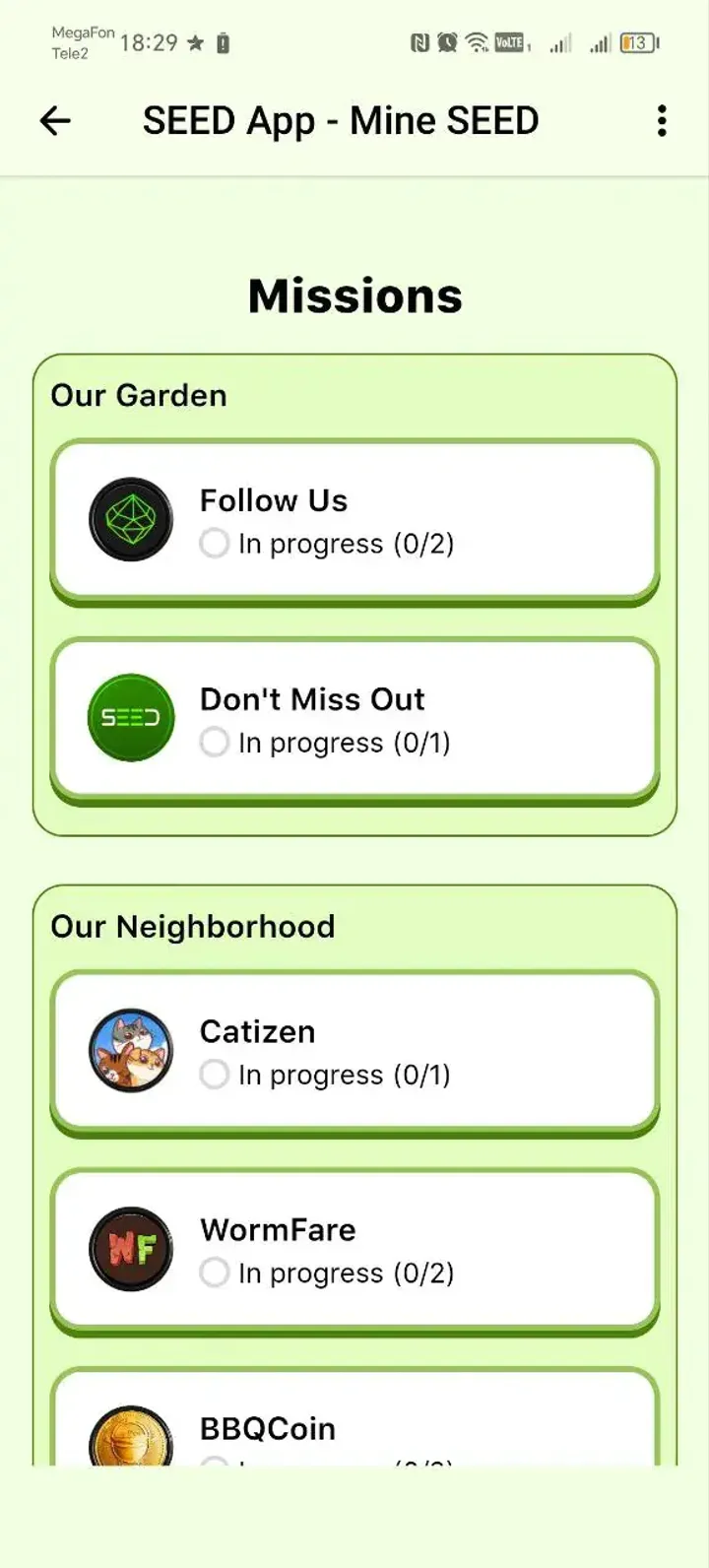
This mechanic creates the illusion of farming progress, although the actual gameplay remains mostly passive and repetitive.
Key Features
Several features are visible inside the application, although most of them revolve around basic progression mechanics.
One of the main elements is the upgrade system, which allows users to increase the speed and capacity of resource generation.
For example, the interface includes upgrades such as:
Storage Level – increases the time SEED can accumulate before needing to be claimed
Tree Level – increases passive generation speed
Holy Water Boost – temporarily multiplies production speed
Each upgrade requires a certain amount of SEED to unlock, meaning players must continuously return to the app and claim small rewards before progressing further.
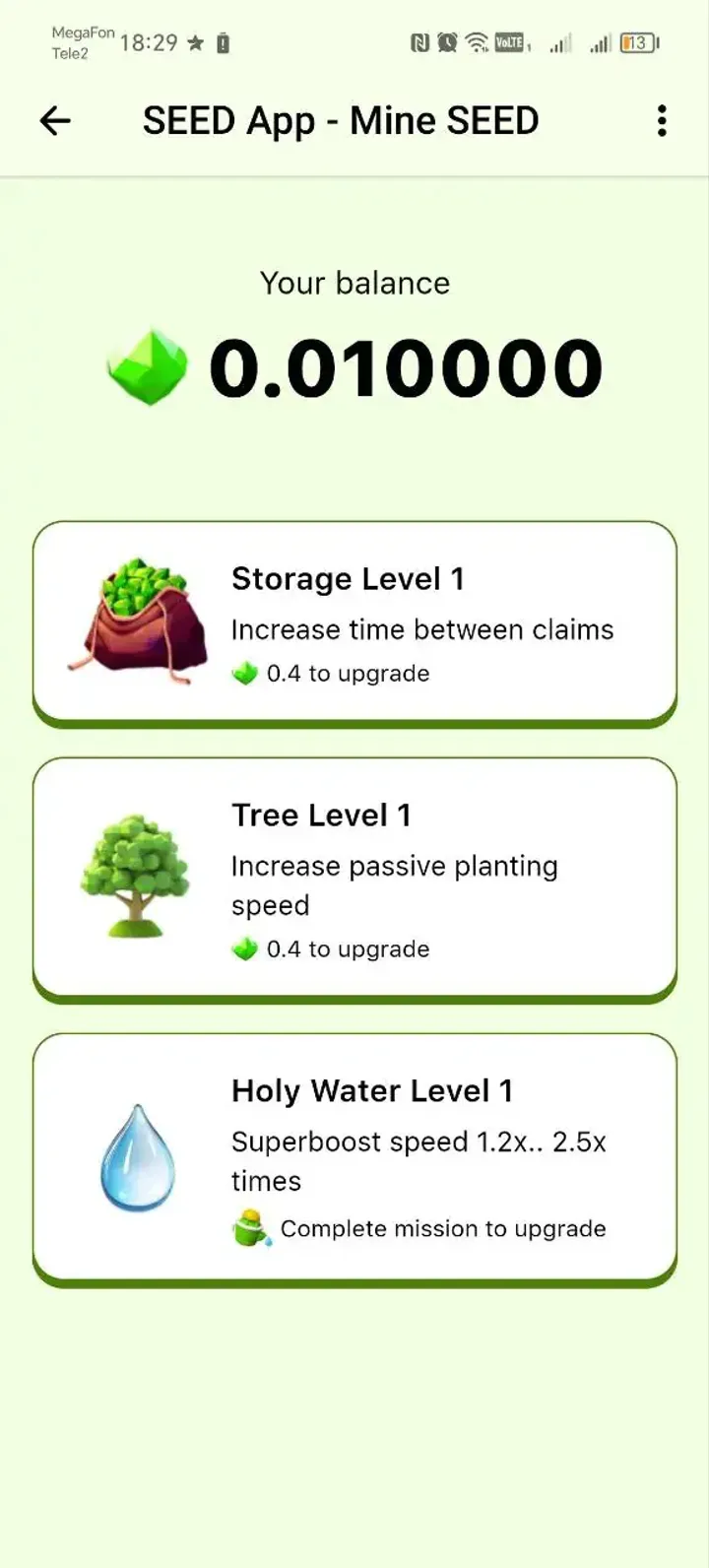
While these mechanics introduce some form of progression, the upgrades themselves do not dramatically change gameplay. Most actions still revolve around collecting tokens and waiting for timers.
Another visible component is the mission system. Missions encourage users to follow external channels, interact with other mini apps, or explore partner projects.
These tasks appear under sections like:
Our Garden
Our Neighborhood
The missions typically involve actions such as following a project, interacting with partner apps, or completing simple engagement tasks.
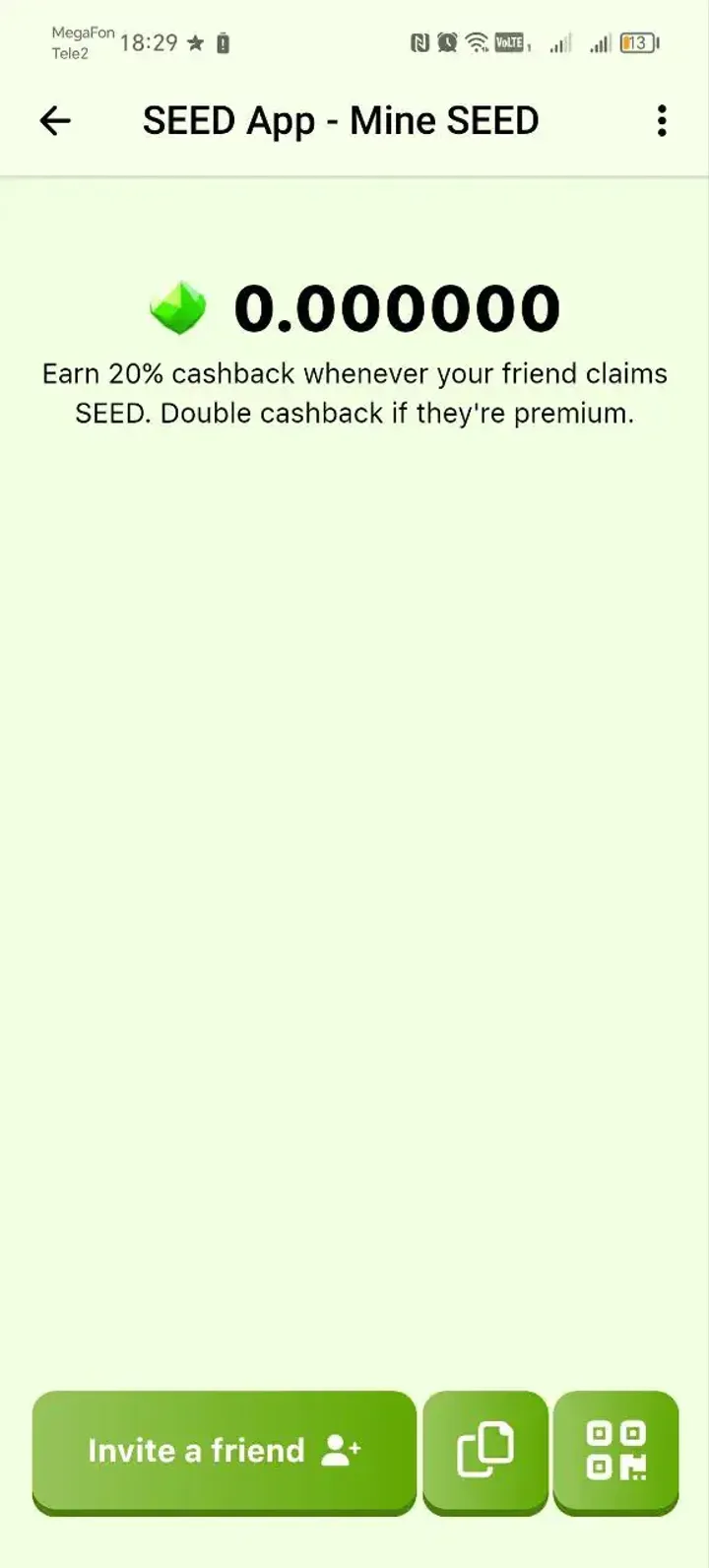
This approach is common in Telegram ecosystems, where mini apps often cross-promote each other to increase user growth.
Referral System
Like many similar platforms, SEED heavily relies on referrals.
The app allows users to invite friends and earn a percentage of their activity. According to the interface, players receive:
20% cashback whenever a referred user claims SEED
double rewards if the referred user has Telegram Premium
This referral system effectively turns the game into a network-growth model rather than a purely gameplay-driven experience.
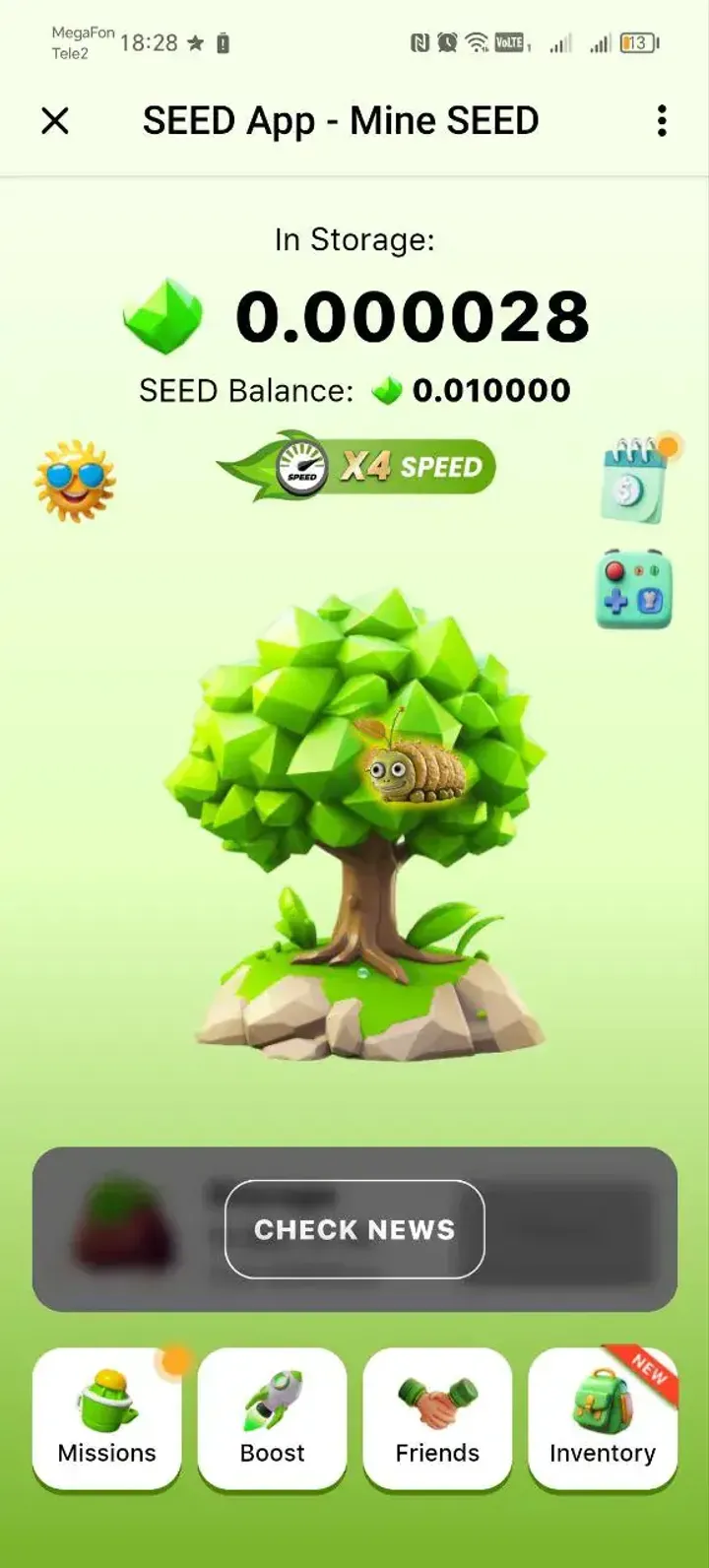
While referral bonuses can boost earnings in theory, they also highlight that much of the reward structure depends on expanding the user base rather than meaningful gameplay progression.
Inventory and Game Elements
The app also includes a small inventory section, although it currently appears limited.
Players can find sections such as:
Worm
Egg
Others
The interface suggests that worms can be discovered by interacting with the tree. These items likely function as future gameplay modifiers or collectibles.
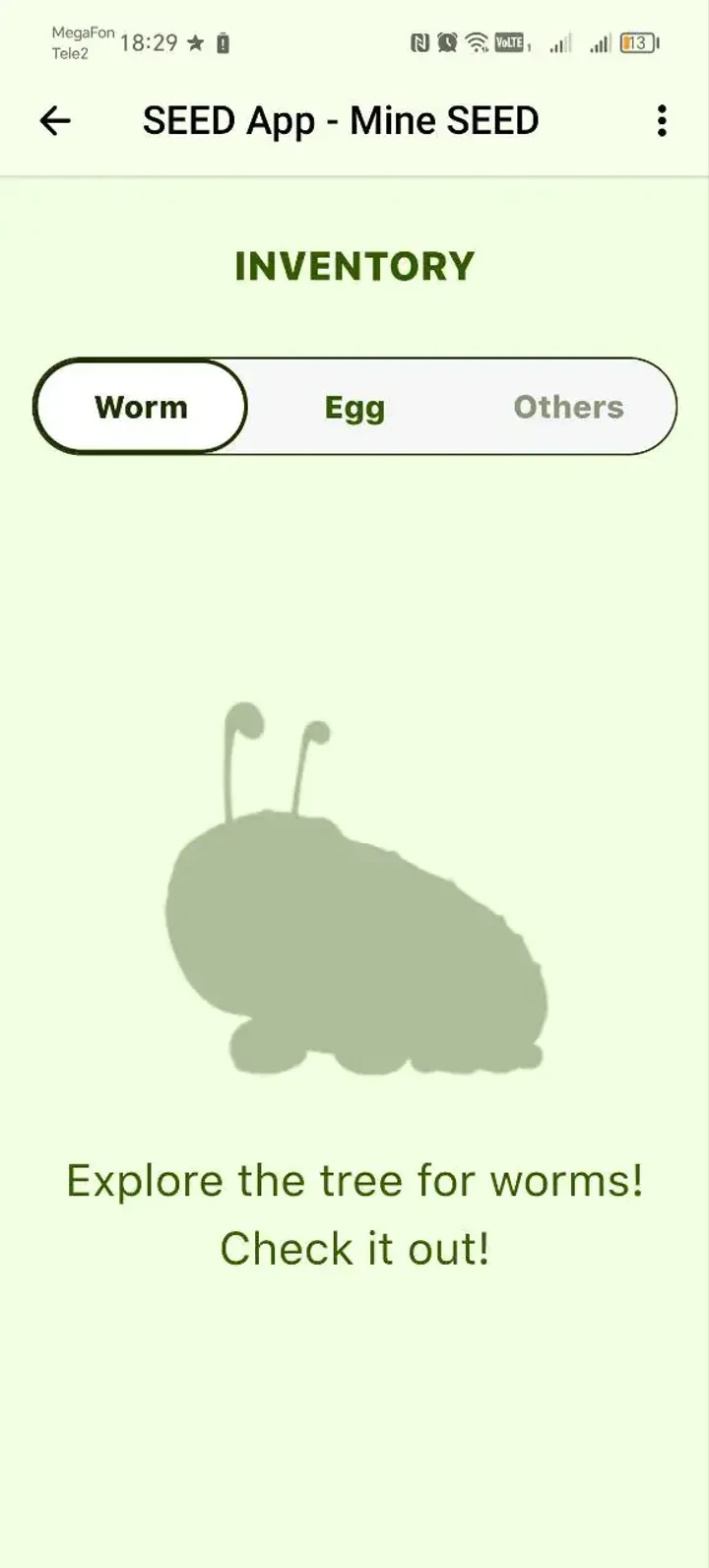
However, the inventory system feels underdeveloped at the moment. There are few visible items, and their purpose is not fully explained inside the interface.
This creates the impression that some features are either unfinished or planned for future updates.
Interface and User Experience
Visually, SEED follows a very typical Telegram Mini App design pattern.
The interface uses:
soft green colors
simple cartoon-style graphics
large buttons and icons
minimal navigation layers
The central tree graphic acts as the main visual focus of the game. The design is friendly and easy to understand, which helps new users quickly grasp the basic mechanics.
Navigation is also simple. The bottom menu provides access to:
Missions
Boost
Friends
Inventory
While this layout makes the app accessible, it also reveals how limited the actual functionality is. Most screens contain only a few actions, and users quickly reach the limits of what the app allows them to do.
Another potential issue is the slow accumulation rate. The balance displayed inside the app increases very gradually, which means progress can feel extremely slow without constant interaction or referrals.
As a result, the overall experience may start to feel repetitive after only a short period of use.
Pros
• Simple and easy-to-understand interface
• Works directly inside Telegram without installation
• Light farming theme with friendly visuals
• Includes upgrade and mission systems
• Referral program can increase rewards
Cons
• Very limited gameplay depth
• Heavy reliance on referrals and partner missions
• Progression feels slow and repetitive
• Inventory and game systems appear underdeveloped
• Lack of clear information about token utility or real value
Overall Impression
SEED tries to combine casual farming simulation with passive reward mechanics inside the Telegram ecosystem. The concept itself is appealing, especially for users who enjoy lightweight idle games.
However, the current implementation feels rather shallow. Most interactions revolve around waiting for tokens to accumulate, claiming them, and completing promotional missions.
The upgrade system offers only minor improvements, and the inventory features do not yet add meaningful gameplay depth. At the same time, the emphasis on referrals suggests that platform growth may be prioritized over user experience.
While the app might appeal to users looking for simple passive interaction, players expecting a deeper farming simulation or a well-developed game loop may find the experience underwhelming.